A new outer ear is only part of the picture. Most children with microtia also have a closed or narrow ear canal, and that affects how they hear, speak and learn. Dr. Nazarian, our otologist, leads your child’s hearing plan from the first test, working alongside Dr. Reinisch so the ear and the hearing are treated as one.
Hearing is a relay. Sound enters the ear canal and makes the eardrum vibrate. Three tiny bones in the middle ear pass that vibration to the fluid-filled inner ear, the cochlea. Nerve cells there turn the movement into signals that the brain hears as sound.
In aural atresia, the canal is narrowed or missing, and the eardrum and middle ear bones may not be fully formed. Sound can’t complete the relay. This is called conductive hearing loss.
New to atresia? Start here →
| Age | What happens |
| Birth to first months | Hearing tests on both ears confirm the type and degree of loss. |
| Infancy onward | A soft-band bone-conduction device can be worn from the first weeks if hearing needs support. |
| Around age 2½ | A temporal bone CT scan shows whether canal surgery is possible. |
| From about age 3 | Canal reconstruction, often in the same session as outer ear reconstruction. |
| From about age 5 | An implanted hearing device, if canal surgery isn’t the right choice. |
The first step is a full hearing assessment. If hearing is reduced, many children start with a bone-conduction processor worn on a soft headband. Instead of travelling through the ear canal, sound is sent as gentle vibrations through the skull bone straight to the inner ear. No surgery is needed, and babies can wear one from their first weeks.
A CT scan of the temporal bone, usually done at around age 2½, shows whether the cochlea is healthy and whether the middle ear has room for a new canal and eardrum. Dr. Nazarian reviews every scan himself to decide whether canal surgery or a hearing device is the better path for your child.
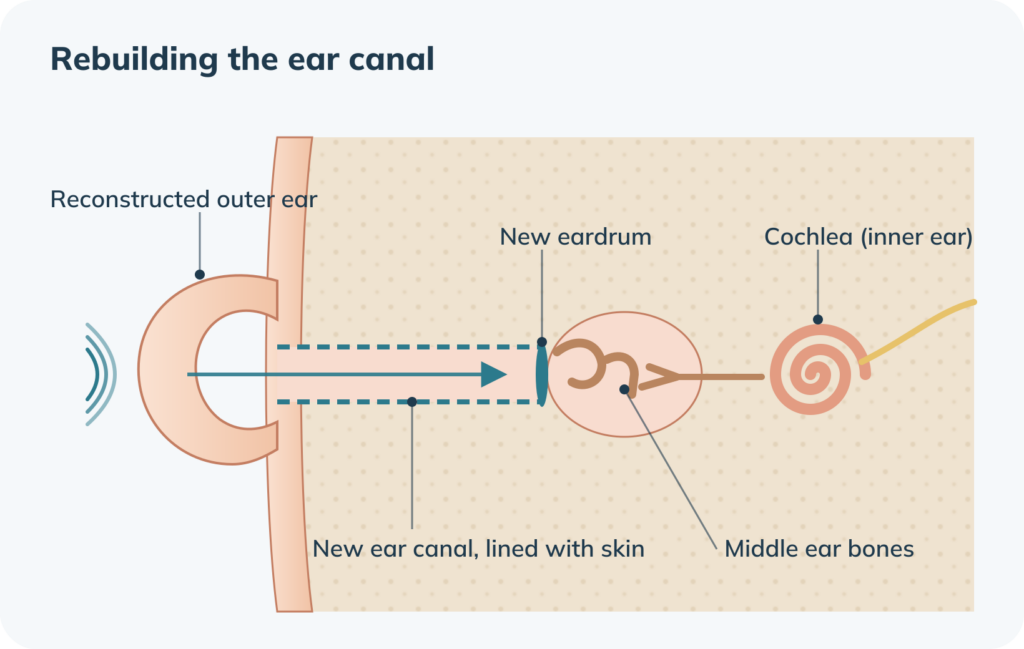
For children with favorable anatomy, Dr. Nazarian creates a new, working ear canal under general anesthesia:
When this is combined with outer ear reconstruction, it is called CAM surgery.
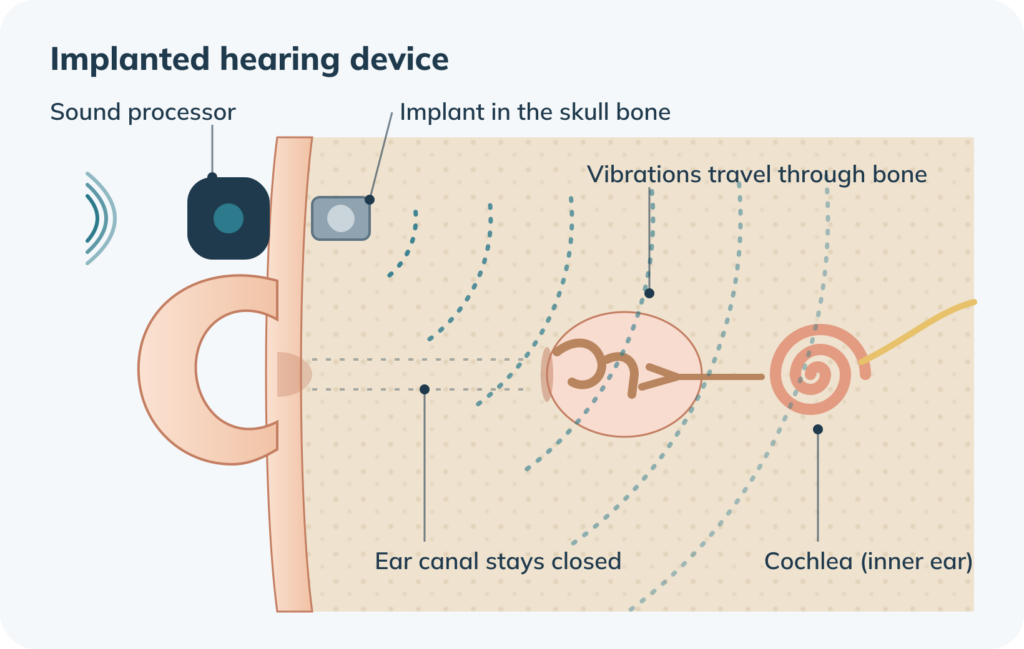
If canal surgery isn’t advisable, an implanted device can deliver sound directly to the inner ear. Dr. Reinisch and Dr. Nazarian will recommend the type that fits your child:
Alongside Dr. Nazarian and Dr. Reinisch, an audiologist is part of your child’s care from start to finish. The audiologist runs the hearing tests, fits and adjusts soft-band and implanted devices, and measures progress after surgery. They are also the person to call when a device needs tuning, or when your child’s school asks for hearing documentation.
Our FAQ answers what parents ask us most, from hearing tests and CT scans to surgery, recovery and travel.
Yes. Most children with microtia on one side hear normally through their other ear. On the affected side, hearing is usually reduced because sound can’t pass through a closed canal. The inner ear typically works normally, which is why hearing can often be improved.
It does. Children with one hearing ear can struggle to tell where sounds come from and to follow speech in noisy places such as classrooms. These challenges often become noticeable once a child starts school.
Often, yes. If the CT shows suitable anatomy, Dr. Nazarian can create a new ear canal and eardrum. If not, an implanted bone-conduction device can send sound directly to the inner ear.